

Bybit Review 2026
 BEST EXCHANGE FOR BEGINNERS


Bybit (formally Bybit Fintech Limited) has undergone a remarkable transformation over the past several years—from a niche derivatives trading venue to the world's second-largest cryptocurrency exchange by trading volume. Founded in March 2018 by Ben Zhou, a Forex industry veteran and former CEO of XM, Bybit launched with perpetual contracts on BTC and ETH, and by 2026 had grown into a comprehensive financial platform with 80 million registered users and approximately 7.2% market share among centralized exchanges.
Bybit's rise to its current standing has been swift: as recently as 2021, the platform had only 3 million users and offered a comparatively narrow set of instruments. Today, its product lineup spans spot trading (~632 pairs), futures and options (~550–717 contracts), Copy Trading, trading bots, Spot X (the successor to Launchpad), the Bybit Earn platform for passive income, and TradeFi—an integration of tokenized real-world assets. The exchange is available in 160+ countries, with its largest user bases in Russia (~24% of traffic), Germany, Ukraine, and South Korea.
Among Bybit's key strengths are its high-throughput matching engine (approximately 100,000 transactions per second), advanced API capabilities for high-frequency trading, and a multi-tiered VIP system with meaningful fee discounts. That said, the platform is not without its challenges: in February 2025, Bybit suffered the largest hack in the history of the crypto markets ($1.5 billion), and a number of key jurisdictions—including the United States, Canada, and Singapore—remain inaccessible to users.
Bybit Exchange Rating
Bybit has made significant strides across multiple dimensions in recent years. Where the platform in 2021–2022 lacked regulatory licenses, fiat infrastructure, and depth in its spot market selection, the situation by 2026 looks substantially different. At the same time, the February 2025 hack and continuing geographic restrictions prevent it from receiving top marks in some categories.
| Overall Score | 8.4 |
|---|---|
 Fees
Fees
|
9 |
 Security & Regulation
|
7 |
 Markets
|
9 |
 Passive Income
|
9 |
 Account Opening
|
8 |
 Deposits & Withdrawals
|
8 |
 Trading Platforms
|
7 |
 Analytics
|
7 |
 Education
|
9 |
 Customer Support
|
9 |
 Bonuses
|
8 |
Pros and Cons
Every exchange has its strengths and trade-offs. For Bybit, the key ones are:
Key Information
Over just eight years, Bybit grew from a platform serving 3 million users to the world's second-largest crypto exchange with 80 million registered clients. Key facts:
| Name | Bybit |
|---|---|
| Website | www.bybit.com |
| Exchange Type | Centralized |
| Regulation | MiCAR (EU, 29 EEA countries), SCA (UAE), FCA (UK, via Archax), FSA (Japan) |
| Taker Fee | 0.1000% – 0.0150% (varies by VIP/Pro level) |
| Maker Fee | 0.1000% – 0.0050% (varies by VIP/Pro level) |
| Demo Account | Available |
| Minimum Deposit | None |
| Withdrawal Limits | From 20,000 USDT/day (without KYC) to 60,000,000 USDT/day (Pro 6) |
| Fiat Withdrawal | SEPA (EU), bank cards, P2P, Apple Pay, Google Pay — availability varies by region |
| Account Opening Time | Approximately 15 minutes for basic registration; verification: several hours to 5 days |
| Margin Leverage | Up to 200x on futures (pair-dependent) |
| Markets | ~467 cryptocurrencies, ~632 spot pairs, ~550–717 futures contracts |
| Passive Income | Bybit Earn (Savings, Staking, Dual Investment, Liquidity Mining), Copy Trading, trading bots |
| Support Languages | Multilingual support (English, Chinese, Korean, Spanish, Russian, and others) |
| Withdrawal Fee | Individual per cryptocurrency and network |
| Deposit Methods | Cryptocurrency, bank cards, P2P, Apple Pay, Google Pay, SEPA (EU) |
| Withdrawal Methods | Cryptocurrency, P2P, SEPA (EU), bank cards (limited) |
| Account Currencies | BTC, ETH, USDT, USDC, MNT, and other cryptocurrencies |
| Promotions | Referral program, Rewards Hub, MNT Multiplier, VIP Trial Card |

Bybit Fees and Charges
Bybit's fees have long been considered among the most competitive on the market. Where the exchange once offered a flat rate for all users, platform growth led to the introduction of a full multi-tier VIP/Pro system that allows active traders to substantially reduce their costs as trading volumes increase. Here is an overview of the fee structure's strengths and limitations:
Trading fees
Unlike the earlier fee structure, where all users paid a flat 0.1% on spot and received negative maker fees on derivatives, Bybit now operates a two-track VIP/Pro system. VIP tiers are assigned based on trading volume or account balance, while the Pro track targets high-volume market makers.
Spot Trading Fees (crypto pairs):
| Level | Taker | Maker |
|---|---|---|
| VIP 0 (Base) | 0.1000% | 0.1000% |
| VIP 1 | 0.0800% | 0.0675% |
| VIP 2 | 0.0775% | 0.0650% |
| VIP 3 | 0.0750% | 0.0625% |
| VIP 4 | 0.0600% | 0.0500% |
| VIP 5 | 0.0500% | 0.0400% |
| Supreme VIP | 0.0450% | 0.0300% |
| Pro 1 | 0.0600% | 0.0400% |
| Pro 2 | 0.0500% | 0.0300% |
| Pro 3 | 0.0400% | 0.0200% |
| Pro 4 | 0.0300% | 0.0150% |
| Pro 5 | 0.0200% | 0.0100% |
| Pro 6 | 0.0150% | 0.0050% |
Futures Trading Fees (Perpetual & Futures):
| Level | Taker | Maker |
|---|---|---|
| VIP 0 (Base) | 0.0550% | 0.0200% |
| VIP 1 | 0.0400% | 0.0180% |
| VIP 2 | 0.0375% | 0.0160% |
| VIP 3 | 0.0350% | 0.0140% |
| VIP 4 | 0.0320% | 0.0120% |
| VIP 5 | 0.0320% | 0.0100% |
| Supreme VIP | 0.0300% | 0.0000% |
| Pro 3+ | from 0.0275% to 0.0180% | 0.0000% |
Notably, Pro 3 and above are subject to a differentiated taker rate: the base rate applies to Inverse contracts and the top-72 USDT Perpetual pairs (including BTCUSDT and ETHUSDT), while less active USDT Perpetual pairs carry a taker fee of 0.0280%–0.0320%.
For options, base fees are 0.03% taker / 0.02% maker; at Pro 5–6, the taker drops to 0.01% and the maker to 0%.
Non-Trading Fees
No deposit fee is charged. Cryptocurrency withdrawal fees are fixed amounts that vary by coin and network. Examples for major cryptocurrencies:
- BTC — approximately 0.0005 BTC (BTC network)
- ETH — approximately 0.005 ETH (ETH network)
- USDT (TRC-20) — approximately 1 USDT
- USDT (ERC-20) — higher, in the range of 3–5 USDT
Fees for major coins are in line with market averages. Exact current amounts are best verified on the withdrawal page, as they may change dynamically based on network congestion.
Average Fees Compared to Competitors
A comparison of Bybit's base fees against key competitors:
| Bybit | OKX | Binance | |
|---|---|---|---|
| Spot Taker | 0.1000% | 0.1000% | 0.1000% |
| Spot Maker | 0.1000% | 0.0800% | 0.1000% |
| Futures Taker | 0.0550% | 0.0500% | 0.0500% |
| Futures Maker | 0.0200% | 0.0200% | 0.0200% |
At the base level, Bybit is on par with Binance and OKX — spot rates are identical. On futures, Bybit's taker fee is slightly higher (0.055% vs. 0.05% for competitors), but this gap narrows at VIP/Pro tiers, and Bybit can be more cost-effective for high-volume traders thanks to its 0% maker fee from Pro 3 onward.
Margin lending
Bybit offers margin trading with leverage ratios among the highest available on the market:
| Contract | Maximum Leverage |
|---|---|
| BTCUSDT Perpetual | Up to 200x |
| ETHUSDT Perpetual | Up to 100x |
| Other USDT Perp | 25x–75x |
| Inverse contracts (BTC/USD) | Up to 100x |
Leverage is set manually by the user. Bybit supports both cross-margin and isolated margin modes, as well as the Unified Trading Account — a combined trading account that allows a single balance to be used across spot, futures, options, and margin trading simultaneously.
Bybit Security and Regulation
Bybit's security and regulatory history offers a clear illustration of how quickly a platform's reputation can shift. As recently as 2022, the exchange was frequently criticized for its offshore registration and lack of licenses. By 2025–2026, Bybit had obtained a number of significant regulatory licenses — but simultaneously experienced the largest security incident in the history of cryptocurrency.
Legal Status and Regulatory Licenses
Bybit was founded by professional traders and bankers in March 2018. The operating entity is Bybit Fintech Limited, incorporated in the British Virgin Islands. For a long period, the company's main offices were located in Singapore; however, in 2023–2024, headquarters were relocated to Dubai (UAE), coinciding with the acquisition of several licenses in the region.
Current regulatory licenses:
- MiCAR (EU) — obtained in June 2025. Covers all 29 countries of the European Economic Area (EEA). Registered in Austria. This represented a major step for Bybit, opening legally compliant access to the European market.
- SCA (UAE) — Virtual Asset Platform Operator license covering trading, custody, and fiat services. Among the first licenses of this type granted in the UAE.
- FCA (UK) — re-entry into the UK market via a partnership with FCA-regulated Archax, with a limited set of trading pairs (~100).
- FSA (Japan) — license for the Bybit Japan subsidiary.
The February 2025 Hack
On February 21, 2025, Bybit suffered the largest hack in the history of the cryptocurrency industry. The Lazarus Group — a North Korea-linked threat actor whose involvement was confirmed by the FBI — stole approximately 401,347 ETH, valued at around $1.4–1.5 billion at the time of the theft.
The attack method was sophisticated: the threat actors compromised Safe{Wallet}'s infrastructure by injecting malicious JavaScript code onto the workstation of one of its developers. This allowed the attackers to substitute the transaction at the point of multisig signing.
Bybit's response was notably swift:
- Within the first 12 hours, the exchange processed over 350,000 withdrawal requests while continuing to operate normally.
- Within 72 hours, reserves had been fully restored through a combination of loans, over-the-counter (OTC) trades, and contributions from whale investors.
- A 1:1 reserve guarantee was activated.
As of March 2025, 86% of the stolen funds had been converted to BTC by the attackers, with approximately $380 million rendered untraceable. The incident unquestionably raised questions about the platform's security posture, but the speed and transparency of Bybit's response allowed it to retain its user base and market position.
Proof of Reserves and Security
In the wake of the February hack, reserve transparency became a priority for Bybit. The exchange now publishes a monthly Proof of Reserves (PoR) based on a Merkle tree, independently audited by Hacken. As early as February 26, 2025 — just five days after the incident — a PoR was published confirming a reserve ratio above 100%. Users can independently verify their own balances.
Additional security measures include: mandatory two-factor authentication (2FA), anti-phishing codes, a withdrawal address whitelist, and cold storage for the majority of user funds.
Bybit Markets and Products
Where only a few years ago Bybit was perceived primarily as a derivatives exchange with a limited spot selection, the picture today is substantially different. The platform now offers a full range of markets and instruments, though it still trails leaders like Binance in the absolute number of listed coins.
Pros and Cons of Bybit's Market Selection
Bybit markets
A comparison of key market metrics against Bybit's main competitors:
| Bybit | OKX | Binance | |
|---|---|---|---|
| Number of cryptocurrencies | ~467 | ~350 | ~500 |
| Number of spot pairs | ~632 | ~600 | ~1,500 |
| Futures contracts | ~550–717 | ~400+ | ~655 |
| Bitcoin | Yes | Yes | Yes |
| Ethereum | Yes | Yes | Yes |
| Altcoins | Yes | Yes | Yes |
| Futures and Options | Yes | Yes | Yes |
| NFT | No (closed Apr. 2025) | No | Yes (only BNB Smart Chain and Ethereum) |
Compared with 2021–2022, the progress is clear: the number of supported cryptocurrencies has grown from 241 to ~467, and trading pairs from 349 to ~632. Bybit has also overtaken Binance in the number of available futures contracts. Trading pairs with AED (UAE dirham) were recently added.
Spot Cryptocurrencies
Spot trading launched on Bybit in July 2021, and has since evolved from a new experiment into a mature market with hundreds of pairs. Approximately 632 trading pairs cover both major cryptocurrencies (BTC, ETH, SOL, AVAX) and cross-altcoin pairs. Each pair displays the latest price, 24-hour change, and trading volume. A dedicated Alpha section is also available for early-stage tokens.
Derivatives Market
Derivatives remain Bybit's strongest area. By aggregate futures trading volume, the exchange consistently ranks among the top three globally. Available instruments include:
- USDT Perpetual — linear perpetual contracts settled in USDT. Leverage up to 200x on BTCUSDT.
- Inverse Perpetual — inverse perpetual contracts settled in the base cryptocurrency (BTC/USD, ETH/USD, and others).
- USDC Perpetual and Futures — contracts settled in USDC.
- Options — options contracts on BTC and ETH.
- Pre-Market Trading — trading of tokens before their official spot listing.
- Spread Trading — trading the spread between contracts.
Bybit supports three order types: market, limit, and conditional. Take-profit (TP) / stop-loss (SL) and trailing stop functions are available. The funding interval for perpetual contracts is every 8 hours.
Passive income on Bybit
Passive income on Bybit has undergone a substantial transformation. Previously, the main destination for passive earnings was the ByFi Center — a dedicated section offering mining, staking, and decentralized finance (DeFi) products. By 2025–2026, ByFi was fully overhauled and replaced by Bybit Earn: a more structured and expanded ecosystem.
Bybit Earn
Current passive income options:
- Savings (Flexible and Fixed) — interest-bearing deposits. Flexible products allow withdrawals at any time; fixed-term products offer higher yields in exchange for a lock-up period.
- Staking — cryptocurrency staking with daily payouts.
- Dual Investment — a structured product offering enhanced yields with the option to convert to another currency at a predetermined rate.
- Liquidity Mining — providing liquidity to pools in exchange for trading fee income.
Copy Trading
One of the platform's most significant additions in recent years is Copy Trading, which allows users to automatically mirror the positions of successful traders. Three modes are available:
- Classic — copy USDT Perpetual positions from master traders.
- Futures Grid Bots — copy Grid Bot strategies.
- Smart Copy — an advanced algorithm with individually customizable settings.
Users can follow up to 10 master traders simultaneously, with configurable risk limits for each.
Trading Bots
Built-in automated strategies include: Grid Bot (range-bound trading), DCA Bot (dollar-cost averaging (DCA)), and Futures Bot (automated futures strategies).
Spot X (formerly Launchpad)
In April 2025, the NFT marketplace and the original Launchpad were closed, with their functions consolidated into Spot X. The updated Launchpad 3.1 platform enables participation in initial decentralized exchange offering (IDO) launches for new projects. In total, 110 projects have been launched through Bybit's Launchpad, raising a combined $1.8 billion.
Bybit Referral Program
Bybit maintains an active referral program. Users earn bonuses for each referred user who reaches a defined trading volume threshold. Separate partner and affiliate programs are available for content creators and traders with an established audience.
Opening an Account on Bybit
The account registration process on Bybit is essentially unchanged — it takes approximately 15 minutes for basic registration. However, without completing know your customer (KYC) verification, access to the platform's full feature set will be restricted and withdrawal limits will be minimal.
Who Can Trade on Bybit?
Bybit is available in 160+ countries, but notable restrictions apply. Trading is prohibited in: the United States, mainland China, Hong Kong, Singapore, Canada (the entire country, not only Quebec), North Korea, Cuba, Iran, Uzbekistan, Syria, Sudan, and the Russian-controlled territories of Ukraine (Crimea, Donetsk, Luhansk, Sevastopol).
Russia is one of Bybit's largest markets, accounting for approximately 24% of traffic. The European Union is served through Bybit EU under the MiCAR license. The United Kingdom is served through the partnership with FCA-regulated Archax, with a limited set of trading pairs available.
How to Open an Account on Bybit:
Step-by-Step Guide
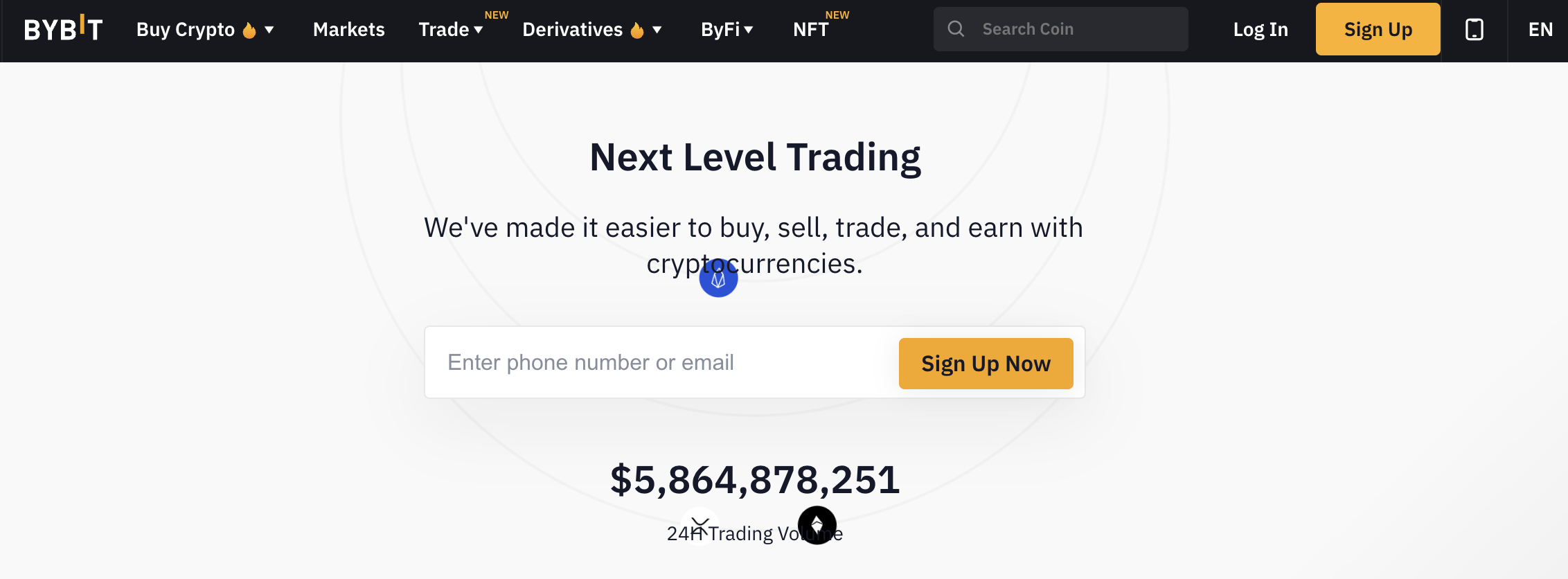
Click the Sign Up button in the top right corner of the Bybit website.
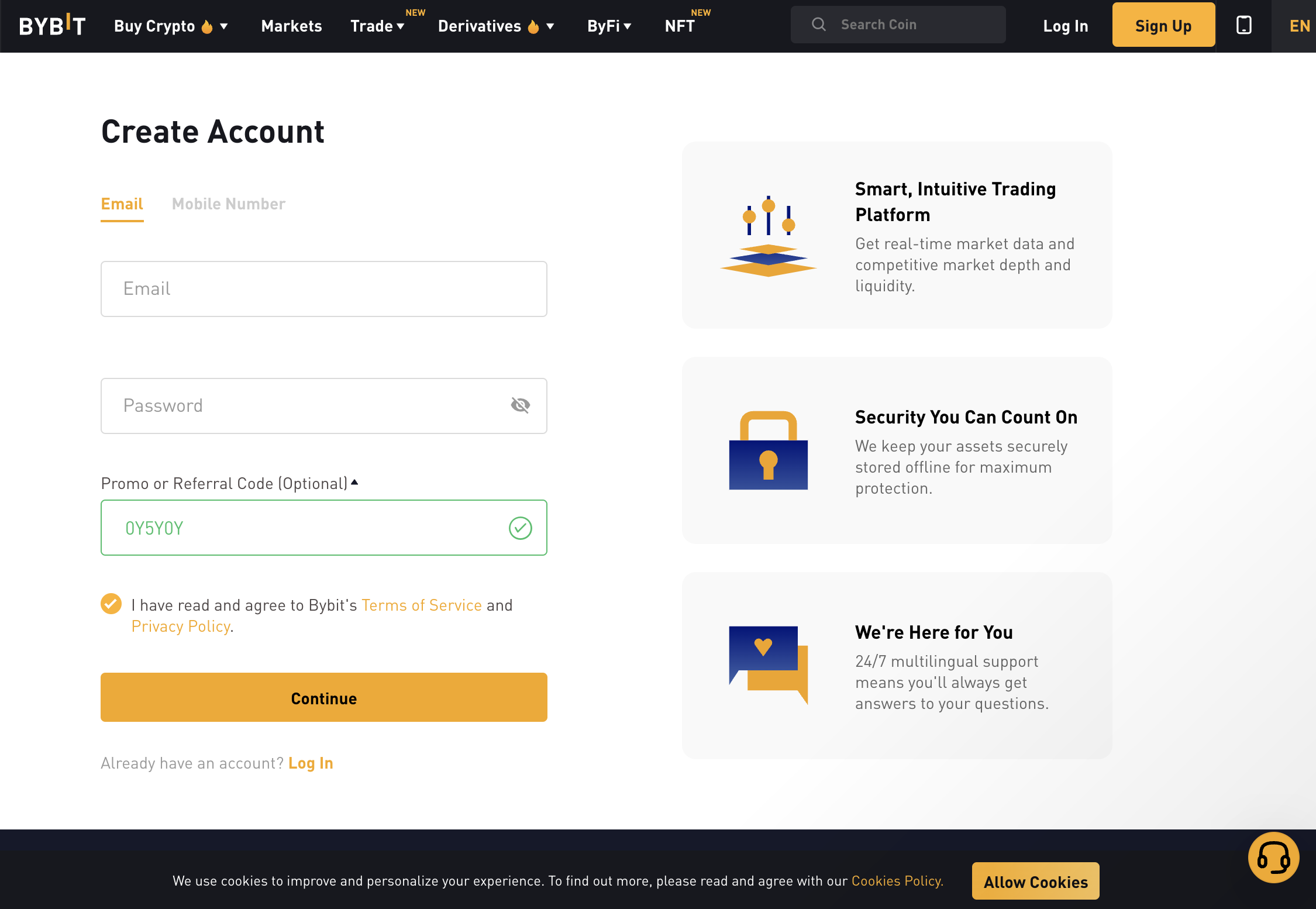
Enter your email address or phone number, create a password, and enter a referral code if you were invited by another user.
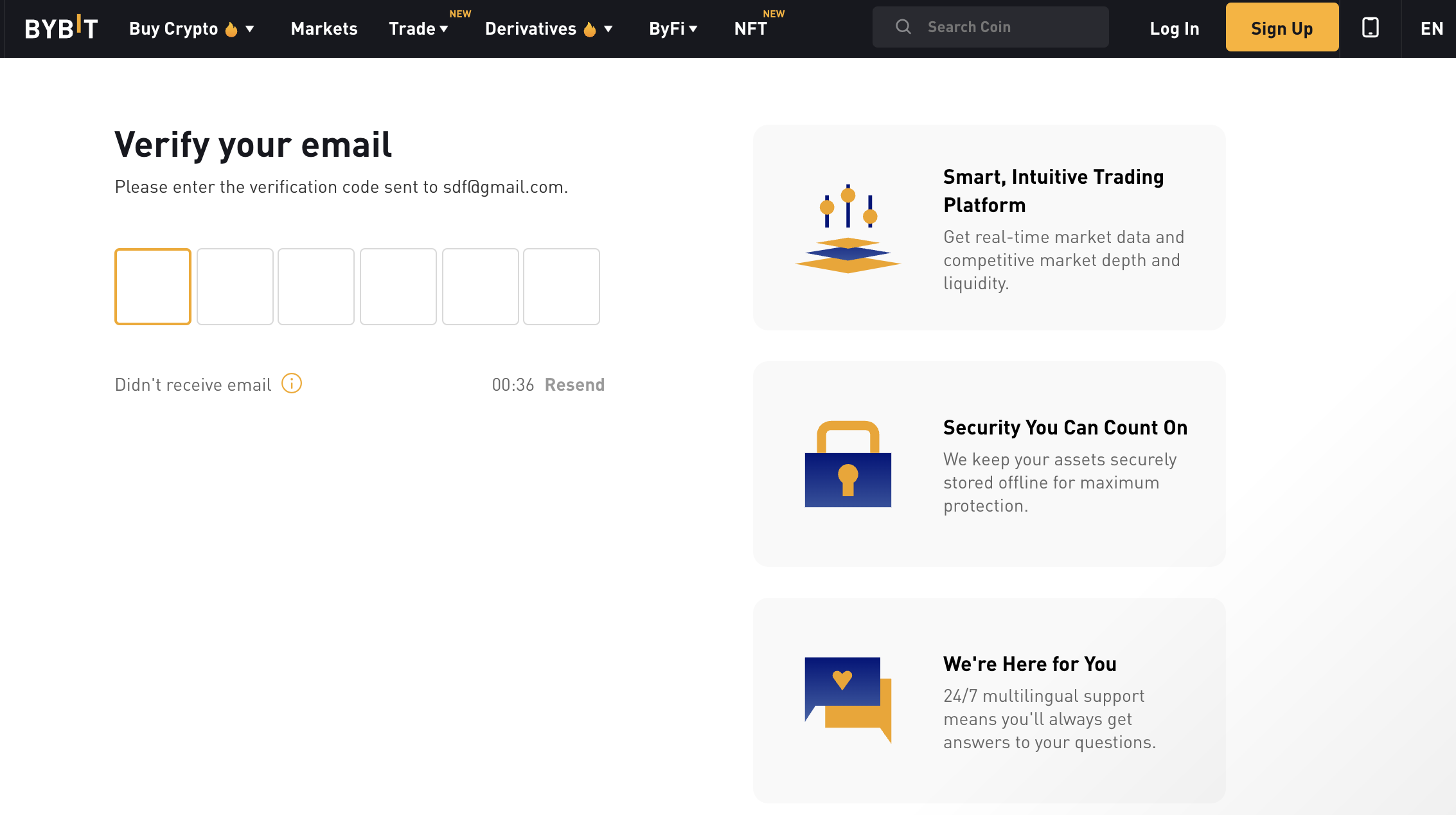
A verification code will be sent to your email or phone. Enter it on the website.
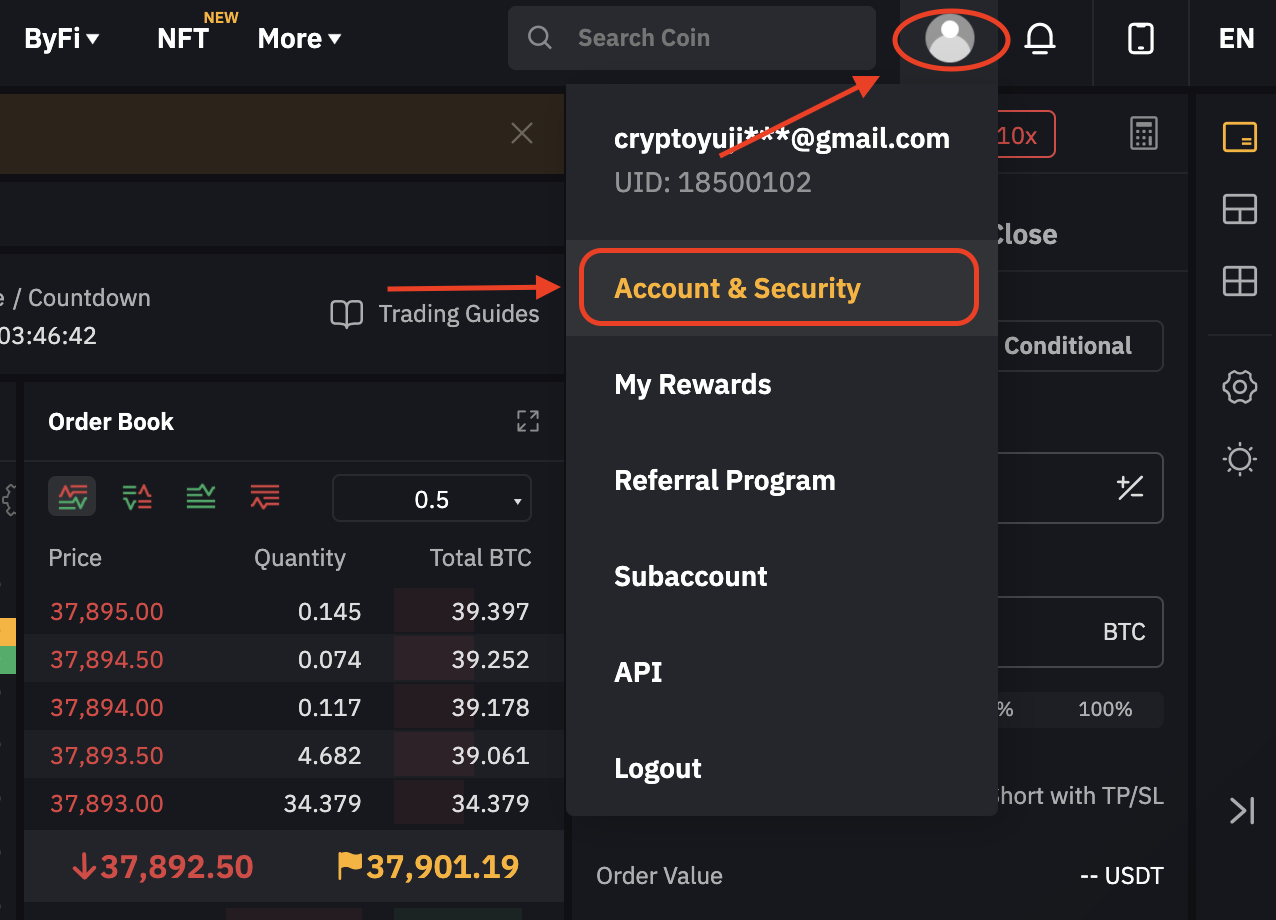
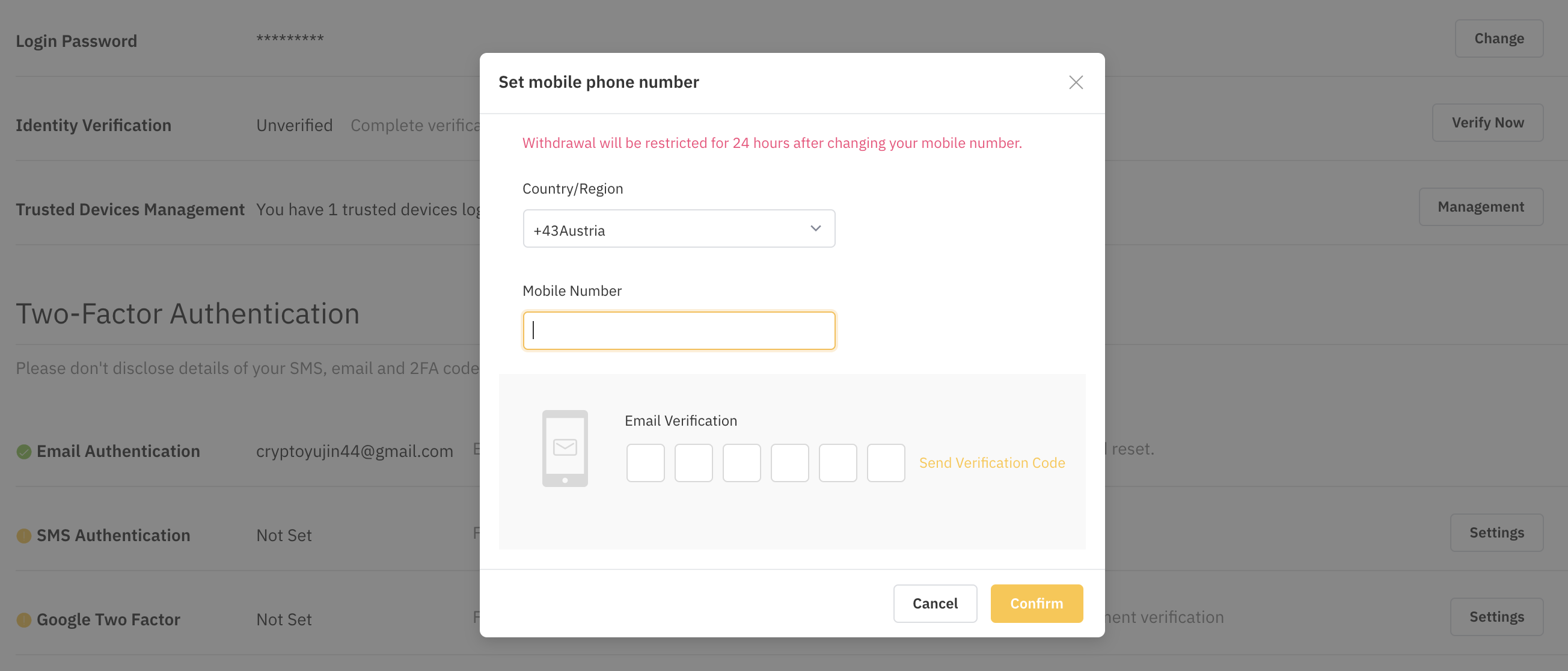
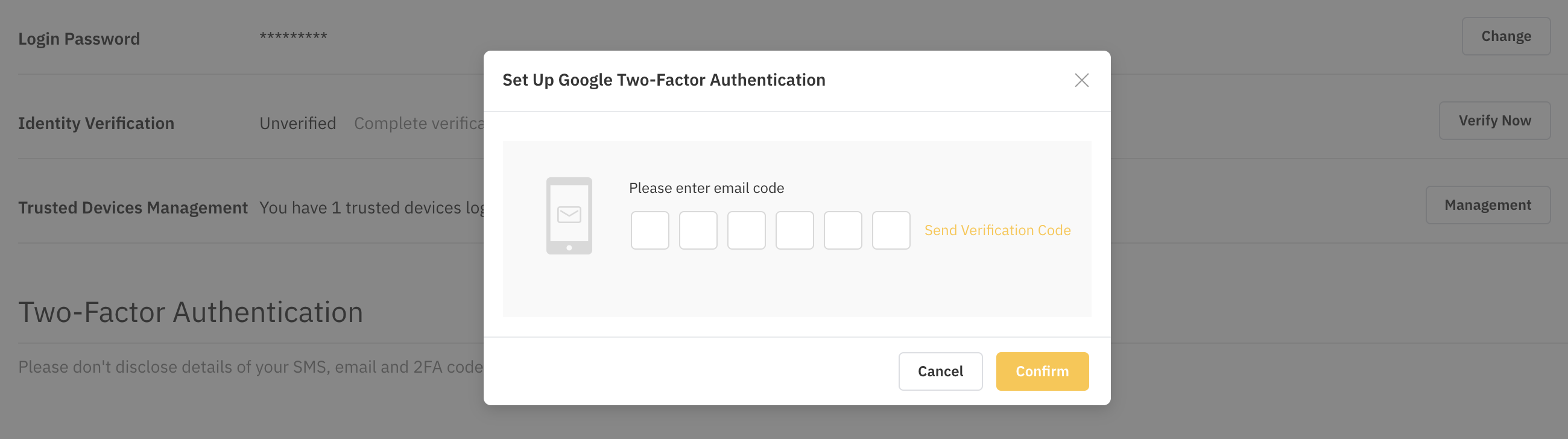
Navigate to the account and security section to set up two-factor authentication (2FA).
Configure 2FA: Google Authenticator and/or SMS.
For full access, complete KYC verification: upload an identity document and complete a facial recognition check.
Minimum Deposit on Bybit
Bybit does not set a minimum deposit — accounts can be funded with any amount. The exchange supports deposits in several hundred cryptocurrencies across multiple networks.
Bybit Account Types
Completing verification unlocks an expanded feature set. Verification levels and withdrawal limits:
| Level | Withdrawal Limit | Requirements |
|---|---|---|
| No KYC | ≤20,000 USDT/day, ≤100,000/month | Limited functionality |
| Basic Verification | ≤1,000,000 USDT/day | Identity verification required (document + selfie) |
| Full Verification | ≤2,000,000–4,000,000 USDT/day | Proof of address required |
| VIP 1–5 | Up to 24,000,000 USDT/day | Based on trading volume or account assets |
| Pro 2–6 | Up to 60,000,000 USDT/day | For market makers |
Corporate clients have access to a separate verification process requiring the submission of incorporation documents.
Deposit and withdrawal on Bybit
The deposit and withdrawal landscape at Bybit has changed considerably in recent years. Where the exchange previously operated exclusively with cryptocurrency and fiat deposits were only possible through third-party providers, a broader range of methods is now available — though regional restrictions still apply.
Deposit and Withdrawal Methods and Processing Times
Let’s review both deposit options in terms of processing time and fees in the table below:
| Method | Processing Time | Fee |
|---|---|---|
| Cryptocurrency (deposit) | 5–30 minutes (network-dependent) | Free |
| Cryptocurrency (withdrawal) | 5–30 minutes | Fixed; varies by coin and network |
| Fiat via One-Click Buy (Banxa, MoonPay) | 2–30 minutes | Provider fee (1–3.5%) |
| SEPA (EU) | 1–3 business days | Minimal or free |
| P2P | Instant (user-to-user) | Free from Bybit |
| Apple Pay / Google Pay | Instant | Provider fee |
Bybit Trading Platforms
Bybit's trading platforms consist of a web interface and mobile applications for iOS and Android. A standalone desktop client does not exist — this remains one of the few persistent limitations since the exchange's founding.
Feature Comparison Table
| Web | Mobile | |
|---|---|---|
| Two-Factor Authentication | Yes | Yes |
| Timeframe Range | 1-minute to monthly | 1-minute to monthly |
| Order Types | Limit, market, conditional, TP/SL, trailing stop | Full set |
| Price History | Yes | Yes |
| TradingView Charts | Yes | Yes |
| Copy Trading | Yes | Yes |
| Trading Bots | Yes | Yes |
| Demo Mode | Yes | Yes |
The iOS and Android mobile apps offer feature parity with the web platform. Position Builder for strategy modeling and Demo Trading for practice are available on both.
Comparison with Competitors
| Bybit | OKX | Binance | |
|---|---|---|---|
| Web | Yes | Yes | Yes |
| Android | Yes | Yes | Yes |
| iOS | Yes | Yes | Yes |
| Desktop | No | No | Yes |
The absence of a desktop application puts Bybit on the same level as OKX, though it remains a differentiator versus Binance, which offers clients for both Windows and Mac.
Trading Platform Features
Key parameters and functionality of Bybit's available platforms:
- Mobile Apps (iOS and Android). Full set of trading tools: spot, futures, options, Copy Trading, trading bots, Bybit Earn. Supports quick deposits and transfers, customizable notifications, and biometric authentication.
- Web Platform. Maximum functionality. Every feature the platform offers is accessible here, including RFQ, Spread Trading, Position Builder, and advanced analytical tools.
Bybit Analytics
Bybit's analytical capabilities have expanded in recent years. Beyond standard TradingView charts and market data, the exchange has introduced a number of additional tools:
TradeGPT is one of the newer tools, allowing users to ask market questions and receive AI-generated responses with technical analysis. Bybit's development roadmap and upcoming initiatives are covered on the official YouTube channel and blog.
Bybit Education
The exchange includes a dedicated Bybit Learn section that has evolved into a full-featured educational portal over recent years. Content covers everything from blockchain and cryptocurrency basics to advanced derivatives trading strategies.
Users can subscribe to Bybit Learn to receive notifications about new content.
Bybit Customer Support
Customer support is one of Bybit's genuine strengths. The Help Center catalog includes an extensive knowledge base in multiple languages. Updates, how-to guides, and FAQs are organized in a structured format.
Support operates via online chat: initial responses come from an AI bot (Ada), with a live agent available for complex issues. VIP users receive priority access and a dedicated account manager.
Communication channels
Stay up to date with Bybit news and reach support through:
- X (Twitter): https://twitter.com/Bybit_Official
- Facebook: https://www.facebook.com/Bybit
- Linkedin: https://www.linkedin.com/company/bybitexchange/
- YouTube: https://www.youtube.com/c/Bybit
Support Languages
Customer support is multilingual — available in English, Chinese, Korean, Spanish, and a number of other languages. Compared with 2021, when support was offered in 4 languages, the coverage has expanded significantly.
Bybit Bonuses and Promotions
Bybit offers a variety of bonus programs. Key highlights:
- Referral Program — bonuses for inviting new users. Structure: a reward is issued upon a referred user's registration, with additional bonuses accruing as their trading volume grows.
- Rewards Hub — current promotions for new and existing users: coupons for first deposits, trading activity rewards, and other incentives.
- VIP Trial Card — access to a VIP-level fee tier for a trial period.
- MNT Multiplier — a program tied to the MNT token (Mantle), Bybit's ecosystem native token (formerly known as BIT/BitDAO, converted to MNT following the rebrand to Mantle Network).
- Bybit Card — a crypto card with cashback in reward points. VIP users receive a multiplier ranging from ×1 (VIP 0) to ×50 (Supreme VIP), equivalent to up to 10% cashback.
Bonuses are applied as trading margin and are forfeited upon withdrawal. Specific terms are updated regularly — refer to the Rewards Hub section of the website for current conditions.
Summary
Bybit has traveled an impressive road: from a niche derivatives venue serving 3 million users to the world's second-largest cryptocurrency exchange with 80 million registered accounts. Only a few years ago, the platform was criticized for its lack of regulatory licenses, limited spot instruments, and absence of fiat support — by 2026, these issues are largely resolved.
That said, February 2025 proved to be a defining test: the $1.5 billion hack by the Lazarus Group — the largest in crypto history — demonstrated that even the biggest platforms carry security risks. The speed of recovery (reserves restored within 72 hours) and subsequent tightening of security measures helped Bybit retain the confidence of most of its users, but the incident cannot be ignored when assessing the platform's reliability.
Bybit is a strong fit for:
- Active derivatives traders — low fees (down to 0% maker), high liquidity, leverage up to 200x.
- Beginners — Bybit Learn, demo trading, Copy Trading, intuitive interface.
- Investors — Bybit Earn, staking, Spot X for access to early-stage projects.
- EU users — regulated access through Bybit EU under the MiCAR license covering all 29 EEA countries.
Points to keep in mind: no desktop application, geographic restrictions (the United States, Canada, Singapore), and fiat withdrawals not universally available. Overall, Bybit in 2026 is a mature, technologically advanced platform competing on equal terms with Binance and OKX across most key metrics.